
In Plato’s Phaedrus, Socrates cautions that writing may weaken memory and create the appearance of wisdom without true understanding. As one of the earliest educators to confront a major technological disruption in learning, Plato was not rejecting writing itself, but questioning how a powerful tool might reshape thinking when it supplants dialogue, relationship, and lived experience.
Today, artificial intelligence presents a comparable moment in education, compelling us to ask not only if or how new tools should be integrated, but also if the fundamental goal of education needs to change in a society that is acutely algorithmic. How must we reorient toward a future where human beings create independently, think deeply, persist through difficulty, and still find meaning and thrive within society.
The Impacts of AI on Critical Thinking, Engagement, and Motivation
MIT researchers asked school leaders about their perspectives on the use of AI in education and cognitive offloading is the primary fear. It’s justified considering that research in the adult population already shows the propensity to offload critical thinking when using AI.
A study presented at The ACM CHI conference on Human Factors in Computing Systems found that while GenAI improved knowledge-work efficiency, it reduced critical engagement and increased long-term dependence. As confidence in AI performance rose, effort shifted from problem-solving to verification and integration, weakening independent reasoning.
Another study out of a business school in Switzerland found similar results, but with a twist. Participants prepared to answer an interview question with the help of AI either with or without guidance. Unguided AI users engaged in cognitive offloading without improving reasoning quality, while those who received structured prompting help significantly enhanced both critical reasoning and reflective engagement. At the educational level, the results speak directly to concerns about AI’s impact on learning if teachers and students do not have proper training.
AI has the ability to make things so easy for users that it has a near immediate negative effect on motivation. A study published in Nature.com found collaboration with AI enhanced immediate task performance, but led to a decline in intrinsic motivation and increased boredom, underscoring the tradeoff between short-term productivity and long-term human engagement. Yet again this makes a strong case against use of AI tools for young learners.
The Importance of Preserving Offline Learning
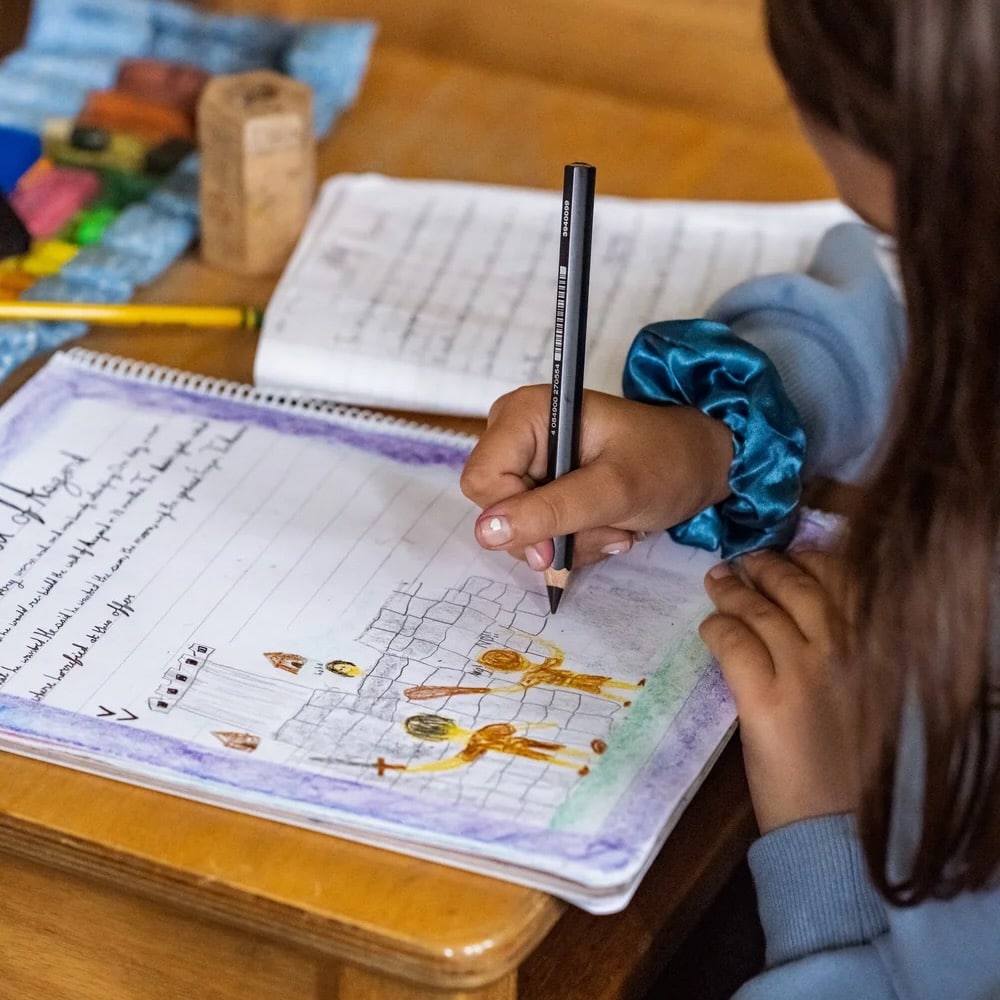
MIT researchers asked subjects to write several SAT essays using either OpenAI’s ChatGPT, Google’s search engine, or nothing at all. Electroencephalogram (EEG) results reinforced the idea that students will learn best without tech assistance and especially without AI assistance. Mastering writing skills offline will increase brain connectivity and help internalize language, reading, and the structure of written communication. This, in turn, can help preserve fluency and comprehension so that when students later use AI tools, they do so as editors and authors, not passive prompt recipients.
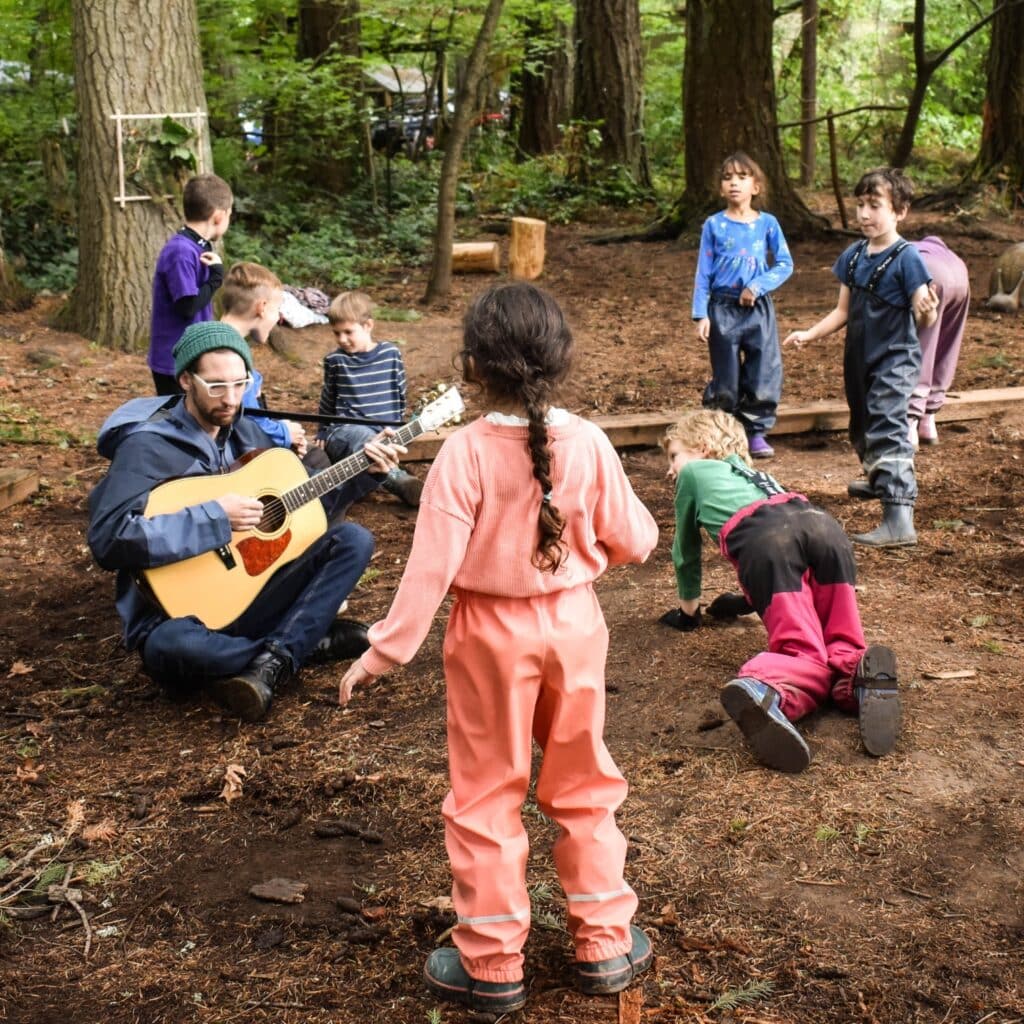
Engaging learners in the offline world will be the key to preserving curiosity and internal motivation. Resilience and will are best taught through productive struggle. For younger students, practical arts applications like learning the violin, woodworking, or knitting shine though in this endeavor. These moments of hands-on difficulty build perseverance, frustration tolerance, and embodied understanding in a way that is engaging and joyful. In an AI-enhanced world where friction is often removed, the capacity to stay with difficulty becomes an advantage.
A Sense of Identity and Human Relationships at the Heart of Schooling
Discernment is a skill that must be developed in children before they receive access to AI. As this UNICEF article warns: “The persuasiveness of AI systems, combined with personality engineering that talks to the human desire for praise and validation, means children’s beliefs, behaviors, and even sense of identity could be shaped by these systems, at a time of their formation and development that is particularly sensitive. Malicious use could make children vulnerable to manipulation and online exploitation and abuse… They could undermine children’s agency, right to freedom of thought, and to independent development.”
Concerns only intensify when AI is centered in learning environments for children. The American Academy of Child and Adolescent Psychiatry in the article “Is AI Dangerous for Children?” highlight risks including overattachment to chatbots, reduced real-world relationships, data privacy vulnerabilities, deep fakes, and the erosion of hands-on, creative, and critical learning.
Some might argue that real-world relationships are truly what’s at stake. Human relationships should be at the center of education. Many studies show that the teacher to student, student to student, and student to community relationship is the prime teacher of empathy, responsibility, and social awareness all while boosting academic outcomes. These are not only human abilities that no machine can replicate, they are the key capacities needed for a grounded and meaningful life.
Ultimately, if we want children prepared for an AI-enhanced world, education’s most urgent task is not to accelerate cognition or outsource thinking, but to anchor children in deep thinking, real relationships, and lived experience. Only from this foundation can artificial intelligence serve human development rather than quietly reshaping what it means to be human.