

Reclaiming the wholeness of human capacity in an age of complexity
For more than a century, the assumption that intelligence is something that should be ranked and graded has shaped school curricula, assessment systems, and even our language about what it means to be “smart.” Academic achievement, test scores, and subject mastery stand as proxies for human capability.
And yet, the world that students now inhabit is revealing the limits of that assumption.
Across education, business, and public life, there is growing recognition that the challenges of our time are not problems of information scarcity but of integration. Climate instability, technological acceleration, and social fragmentation do not yield to isolated expertise. They require the capacity to hold complexity, to collaborate across differences, and to act with discernment in situations where the right answer is not readily apparent.
This 2025 report from the World Economic Forum finds that rapid technological, economic, and climate shifts will transform 22% of jobs by 2030, increasing demand for both technical skills and human capacities such as resilience, leadership, and creative thinking. In this context, we are invited to consider a broader, more human understanding of intelligence—integrated intelligence: the ability to think clearly, feel deeply and with awareness, act with intention, and live with a sense of purpose.
The urgency of this integration is heightened by the rapid advancement of artificial intelligence. As machines assume an increasing share of routine cognitive tasks, the comparative advantage of human beings shifts. Skills that can be automated become less defining. In their place, capacities such as judgment, ethical reasoning, creativity, and relational intelligence grow in importance.
This interpretation of intelligence is not new in essence, but newly necessary. Over the past several decades, research across psychology, neuroscience, and education has begun to articulate a broader understanding of intelligence.
Howard Gardner developed his theory of multiple intelligences over 40 years ago to challenge narrow views of both achievement and assessment. Daniel Goleman’s work on emotional intelligence further expanded the field, demonstrating that the ability to understand and manage emotions is a critical determinant of leadership and relational effectiveness.
The paper Hard Evidence on Soft Skills further reinforces the work of Daniel Goleman by demonstrating how traditional measures of intelligence, such as achievement tests and IQ scores, fail to capture many of the skills that shape long-term success. “Non Cognitive” skills and traits such as motivation, persistence, personality, and goal-setting play a significant role not only in personal development but also in educational attainment and labor-market outcomes.
Recognizing these limitations, international education frameworks have increasingly shifted toward a broader understanding of human capability. The Organisation for Economic Co-operation and Development’s Future of Education and Skills 2030 initiative articulates a vision of education that extends beyond knowledge acquisition alone. It suggests that thriving in contemporary society requires the integration of cognitive, social, and emotional dimensions of learning, positioning these capacities not as supplementary, but as foundational to human development.
Longitudinal research supports this expanded view. Evidence synthesized through the OECD’s research on social and emotional skills shows that competencies such as self-regulation, empathy, perseverance, and collaboration are strongly associated with academic achievement, employment outcomes, and overall well-being. These findings suggest that educational success cannot be understood solely through the lens of academic knowledge, but must also account for the development of the interpersonal and intrapersonal capacities that shape how knowledge is applied.
Cognitive science further deepens this picture. The comprehensive meta-analysis How People Learn II: Learners, Contexts, and Cultures highlights how learning and action depend on the integration of multiple forms of understanding. The ability to empathize, for example, is limited without the clarity to discern truth, while the capacity to act effectively is weakened without both knowledge and a sense of purpose.
Research in cognitive science and motivation similarly shows that critical thinking depends on contextual knowledge and the ability to anticipate consequences. As technological and cultural shifts reshape both personal and professional life, success increasingly depends not only on analytical ability but also on the capacity to sustain motivation, cultivate belonging, and maintain well-being. In this light, sustained action is strengthened when individuals understand what they are doing and experience a sense of purpose.
Research into effective educational practice offers important guidance. Studies consistently show that learning is strengthened when students are engaged not only cognitively, but emotionally and socially. Classrooms characterized by strong relationships, opportunities for collaboration, and meaningful, experiential learning environments produce outcomes that extend beyond academic performance.
What unites this approach is not a particular methodology, but a shared recognition: that human development is holistic. When education engages the whole person, learning becomes deeper, more transferable, and more enduring.
What is clear is that intelligence, when understood narrowly, obscures more than it reveals.
We must expand our view of intellectual pursuits and reorient the purpose and design of education itself, by designing learning experiences that connect disciplines rather than isolate them, invite reflection as well as action, and recognize the formative role of relationships and community.
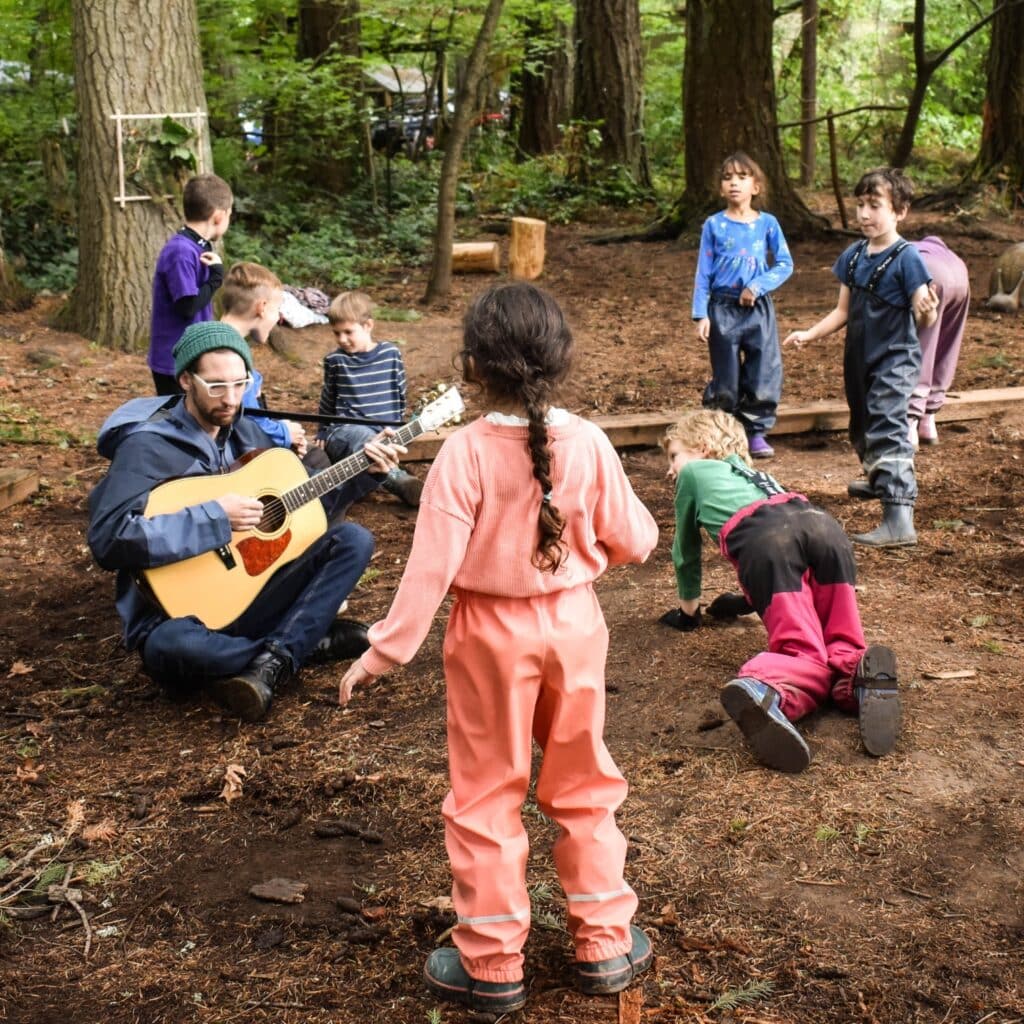
Photo Credit: Live Oak Waldorf School